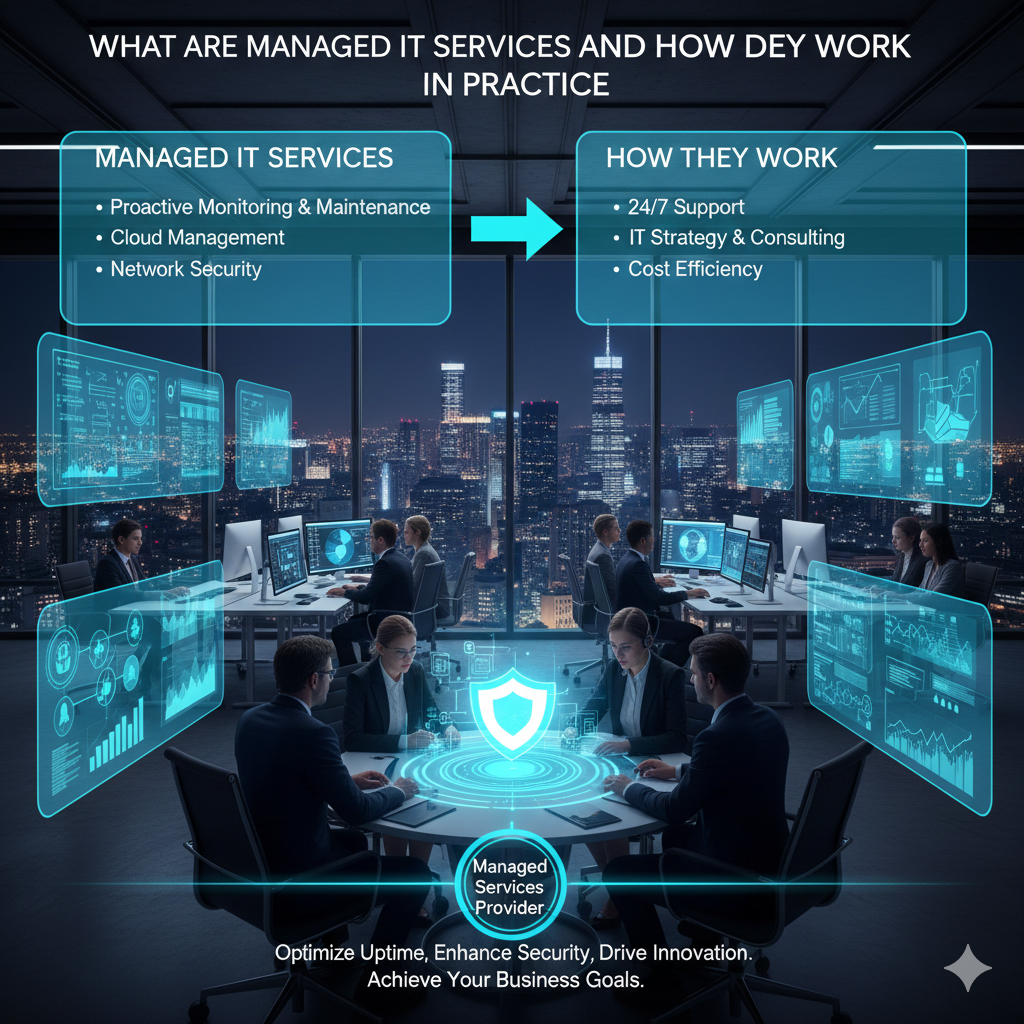
Managed IT Services have become a core part of how modern organizations maintain stable, secure, and efficient technology environments. As businesses grow more dependent on digital systems, relying solely on internal IT teams has become harder to scale and more expensive to manage. Managed IT Services offer a structured way to outsource day-to-day IT responsibilities while maintaining control, performance, and accountability. Understanding how they work in practice helps organizations decide whether this model fits their operational needs.
The Core Concept Behind Managed IT Services
At a basic level, Managed IT Services involve outsourcing specific IT functions to a third-party provider under a recurring service agreement. Instead of reacting to problems as they arise, the provider proactively monitors systems, maintains infrastructure, and resolves issues before they disrupt operations. This shift from reactive support to ongoing management is what separates Managed IT Services from traditional break-fix IT support.
According to a 2024 CompTIA report, more than 60 percent of mid-sized organizations now use Managed IT Services to handle routine IT operations such as network monitoring, endpoint management, and user support. These services typically include system updates, patch management, performance monitoring, and helpdesk support, all delivered under defined service levels.
In practice, Managed IT Services operate through centralized tools that provide visibility into servers, devices, networks, and applications. Providers use automated alerts and dashboards to detect issues early, allowing them to act before users experience downtime. This proactive approach improves system reliability and reduces unexpected outages.
How Managed IT Services Operate Day to Day
Managed IT Services function through a combination of people, processes, and technology. Once onboarding is complete, the provider gains controlled access to the organization’s systems. Monitoring tools continuously track performance metrics such as uptime, storage usage, security events, and network health.
When an issue arises, it is logged, prioritized, and resolved according to predefined response times. For example, critical outages receive immediate attention, while lower-impact issues are scheduled based on urgency. This structured workflow creates predictability and accountability. Gartner research shows that organizations using managed service models experience up to 25 percent fewer critical incidents compared to those relying on internal teams alone.
User support is another practical component. Employees submit requests for access, software installation, or troubleshooting through a centralized system. Instead of relying on informal communication or internal ticket queues, Managed IT Services streamline requests and ensure consistent resolution. This improves response times and reduces frustration across departments.
Many providers also handle vendor coordination. This includes managing software licenses, hardware warranties, and third-party support escalations. By acting as a single point of contact, Managed IT Services reduce the administrative burden on internal teams and leadership.
Business Value and Measurable Outcomes
The value of Managed IT Services extends beyond operational convenience. One of the most significant benefits is cost predictability. Rather than fluctuating expenses tied to emergency fixes or staffing changes, organizations pay a consistent monthly fee. A Deloitte study found that companies using managed services reduced overall IT operating costs by an average of 20 to 30 percent.
Security is another major outcome. Managed IT Services providers enforce patching schedules, monitor threats, and support access control policies. According to IBM’s Cost of a Data Breach Report, organizations with proactive security monitoring detected incidents 74 days faster than those without managed oversight. Faster detection directly reduces financial and reputational damage.
Scalability is equally important. As businesses grow or change, Managed IT Services adjust accordingly. New users, locations, and systems can be added without rebuilding internal infrastructure. This flexibility is especially valuable for organizations experiencing rapid growth or seasonal demand.
Managed IT Services also improve internal focus. When routine maintenance and support are handled externally, internal teams can concentrate on strategic initiatives such as digital transformation, system optimization, and business innovation. This alignment between IT operations and business goals is often cited as a key reason organizations adopt managed service models.
Conclusion
Managed IT Services provide a practical framework for maintaining reliable, secure, and scalable IT operations in modern organizations. By shifting from reactive problem-solving to proactive system management, businesses gain better visibility, stronger security, and more predictable costs. The day-to-day operation of Managed IT Services combines monitoring, user support, maintenance, and vendor coordination into a structured and accountable model.
Understanding how Managed IT Services work in practice helps leaders evaluate whether this approach aligns with their operational priorities. For organizations seeking stability, efficiency, and the ability to scale without constant disruption, managed services offer a proven path forward. As technology continues to evolve, the role of Managed IT Services will remain central to sustaining long-term business performance.

 Everywhere
 Members
 Albums