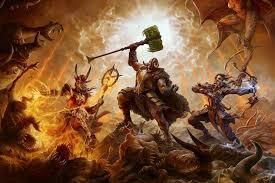
At the core of *Diablo 4*, beneath the sprawling open world and the deep lore, lies its undeniable pulse: a combat system of extraordinary visceral satisfaction and strategic depth. This is not mindless hacking and slashing; it is a brutal ballet where every skill connection, resource expenditure, and positional decision matters. The game masterfully fulfills its core promise of **class fantasy**, ensuring that whether you are a lightning-wielding sorcerer or a shapeshifting druid, your moment-to-moment gameplay feels uniquely powerful and authentically tied to your chosen archetype.
Each of the five classes operates as a distinct instrument in this symphony of destruction. The **Barbarian** feels like an unstoppable force of nature, leveraging a unique arsenal system to wield four different weapons seamlessly, their attacks carrying a tangible weight that sends foes crumpling. The **Sorcerer** is a glass cannon of elemental fury, layering burning, freezing, and shocking effects that not only deal damage but actively manipulate the battlefield, freezing hordes solid before shattering them with a satisfying crash. The **Druid** embodies primordial versatility, fluidly morphing from a werebear tank to a werewolf assassin or a storm-calling spellcaster, often within a single skill rotation. This profound differentiation means that playing a different class is not merely a change of skills, but a complete recalibration of playstyle, objectives, and rhythm.
The combat’s brilliance is amplified by its superb feedback and physics. Enemies don’t just lose health bars; they react to the force of blows, stagger from heavy impacts, and explode into giblets or freeze into brittle statues. The sound design is equally critical—the crackle of chain lightning, the deep thud of a seismic slam, the sharp slice of a rogue’s blades—each audio cue provides essential information and reinforces the power of the ability. This creates an addictive, tactile loop where using a skill feels inherently good, encouraging experimentation and mastery.
Furthermore, combat is deeply intertwined with character building. Skills are not isolated; they synergize. A rogue might use a dash that leaves behind caltrops, then detonate them with a shadow imbuement, causing a chain reaction of poison among tightly packed mobs. A necromancer’s entire army of minions can be sacrificed in a single, devastating bone spirit explosion. This moves gameplay beyond simple cooldown management into the realm of combo-building and energy resource orchestration. In the challenging endgame, such as **Nightmare Dungeons**, this becomes essential. Positioning, crowd control sequencing, and knowing when to unleash your ultimate ability against an elite pack with dangerous modifiers separate the survivors from the slaughtered.
Diablo 4 Items understands that an action RPG lives and dies by its combat. It delivers a system that is immediately accessible and enjoyable, yet reveals immense depth for those who seek to master it. By so perfectly nailing the **class fantasy** and marrying it to responsive, impactful, and synergistic gameplay, it ensures that the simple act of clearing a dungeon remains a thrilling, empowering, and deeply satisfying core loop, hundreds of hours into the journey through Sanctuary’s darkness.

 Everywhere
 Members
 Albums