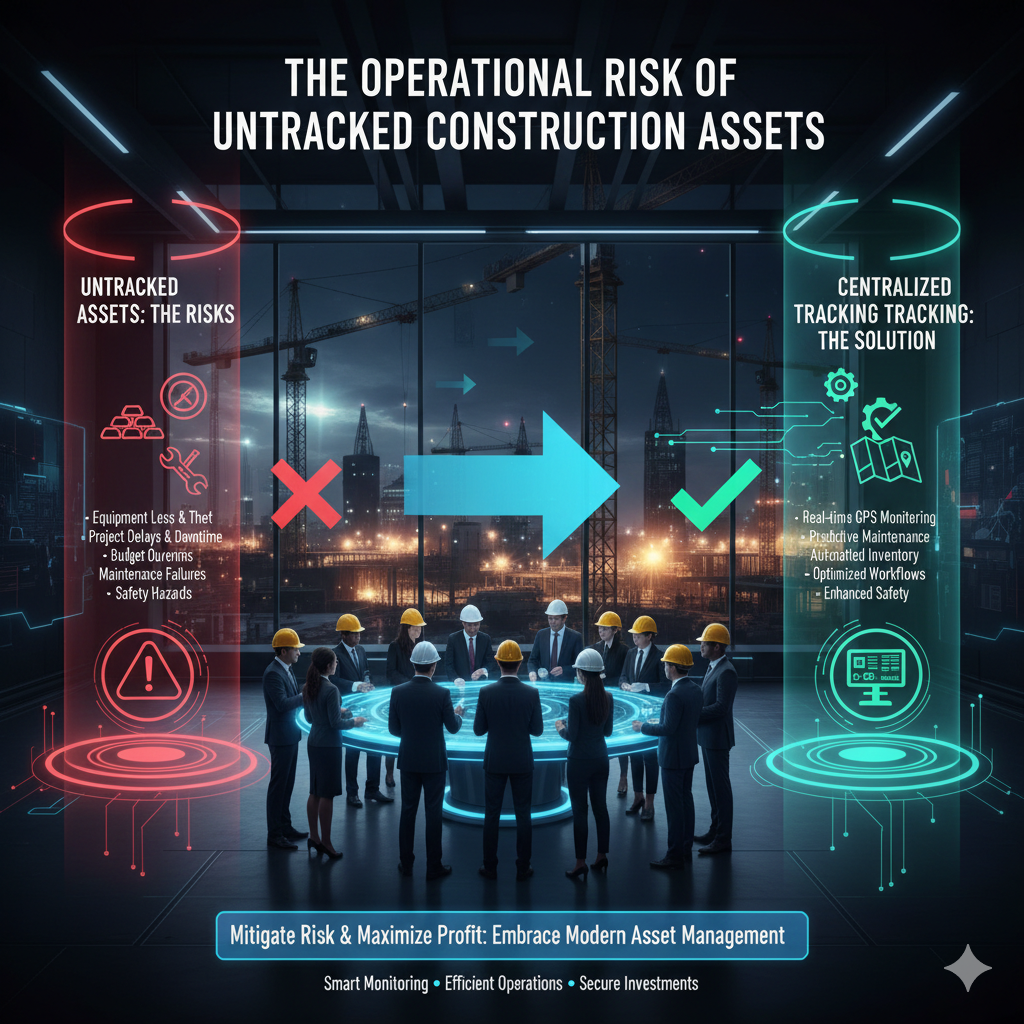
Construction projects depend on timing, coordination, and access to the right resources at the right moment. Equipment, tools, and mobile assets move constantly between jobsites, storage yards, and maintenance locations. When those assets are not properly tracked, operational risk increases quietly and steadily. Missed schedules, unexpected costs, and workflow disruptions often trace back to one issue that rarely gets immediate attention: untracked assets.
Construction asset tracking software has become a critical layer of operational control. It provides visibility into where assets are located, how they are being used, and whether they are available when needed. Without that visibility, teams are forced to rely on assumptions that rarely hold up in active construction environments.
How Asset Blind Spots Develop on Jobsites
Asset blind spots do not appear overnight. They develop as projects scale, fleets expand, and manual tracking methods fall behind real world complexity. Paper logs, spreadsheets, and verbal updates struggle to keep pace with daily equipment movement.
Assets may be checked out informally, moved without documentation, or left idle on completed sites. Over time, this creates uncertainty about availability and ownership. Schedulers plan work based on outdated information, while field teams waste time searching for tools that should already be on site.
Operational Delays Caused by Missing Assets
When assets cannot be located quickly, productivity slows. Crews stand by while replacements are sourced or rented. Tasks are reordered on the fly, often leading to inefficiencies that ripple across the schedule.
These delays are rarely logged as asset issues. They show up as missed deadlines, overtime labor, or compressed timelines later in the project. Without construction asset tracking software, the root cause remains hidden, making the same problems likely to repeat on future jobs.
Financial Exposure From Asset Loss and Misuse
Untracked assets are more vulnerable to loss, theft, and misuse. Small tools disappear gradually. Larger equipment may sit unused on remote sites long after work is complete. In some cases, assets are rented unnecessarily because owned equipment cannot be found in time.
This financial exposure adds up through replacement costs, higher insurance claims, and increased rental expenses. Construction asset tracking software reduces this risk by creating accountability and providing a clear record of asset movement and usage.
The Impact on Equipment Utilization
Poor visibility leads to uneven utilization. Some assets are overworked while others sit idle. Without accurate data, it becomes difficult to balance workloads or make informed decisions about fleet size.
Tracking software reveals usage patterns that help teams allocate resources more effectively. When utilization improves, projects benefit from smoother execution and lower operating costs. Without tracking, utilization issues remain hidden behind guesswork.
Safety and Compliance Risks
Untracked assets also create safety concerns. Equipment that has missed inspections or maintenance may be put back into service unknowingly. Tools may be used outside approved conditions or by unauthorized personnel.
Construction asset tracking software supports safer operations by maintaining records tied to specific assets. Inspection histories, service intervals, and assignment data help ensure that equipment is used responsibly and in line with safety requirements.
Scheduling Conflicts and Planning Errors
Schedules rely on accurate inputs. When asset availability is uncertain, plans are built on fragile assumptions. A single missing piece of equipment can disrupt an entire sequence of work.
Tracking software connects asset data to planning workflows. Planners can confirm availability before committing to timelines. Field teams gain clarity on what equipment should be on site and when. This alignment reduces last minute changes and improves schedule reliability.
Fragmented Communication Between Teams
Asset confusion often leads to tension between office and field teams. Schedulers assume equipment is available. Crews report otherwise. Without shared data, these conversations become unproductive and repetitive.
Construction asset tracking software creates a shared source of truth. Everyone works from the same information, reducing misunderstandings and supporting more constructive collaboration.
Key Operational Risks of Untracked Assets
The risks associated with poor asset visibility tend to compound over time. Common operational issues include:
- Delayed tasks due to unavailable equipment
- Increased rental and replacement costs
- Lower utilization across owned assets
These challenges are difficult to address without reliable tracking data.
How Construction Asset Tracking Software Reduces Risk
Construction asset tracking software addresses these risks by bringing structure and visibility to asset management. Location tracking, status updates, and historical records provide the foundation for better decisions.
With tracking in place, assets are easier to locate, assign, and recover after project completion. Managers gain confidence in their inventories, and planning becomes more grounded in reality.
Supporting Long Term Operational Improvement
Beyond immediate risk reduction, tracking data supports continuous improvement. Patterns emerge across projects that highlight inefficiencies, underused assets, and recurring bottlenecks.
Teams can use this insight to refine processes, adjust fleet strategies, and improve project planning over time. Without tracking, these opportunities remain hidden.
Conclusion
Untracked construction assets introduce operational risk that affects schedules, budgets, and team performance. The impact is often gradual, making it easy to overlook until costs and delays become unavoidable.
Construction asset tracking software provides the visibility needed to regain control. By knowing where assets are, how they are used, and when they are needed, construction teams reduce uncertainty and strengthen daily operations. Asset tracking does not eliminate every challenge, but it removes one of the most persistent sources of disruption across construction projects.

 Everywhere
 Members
 Albums